LPDA vs Panel vs Omni Antennas for 4G & 5G Fixed Wireless Access
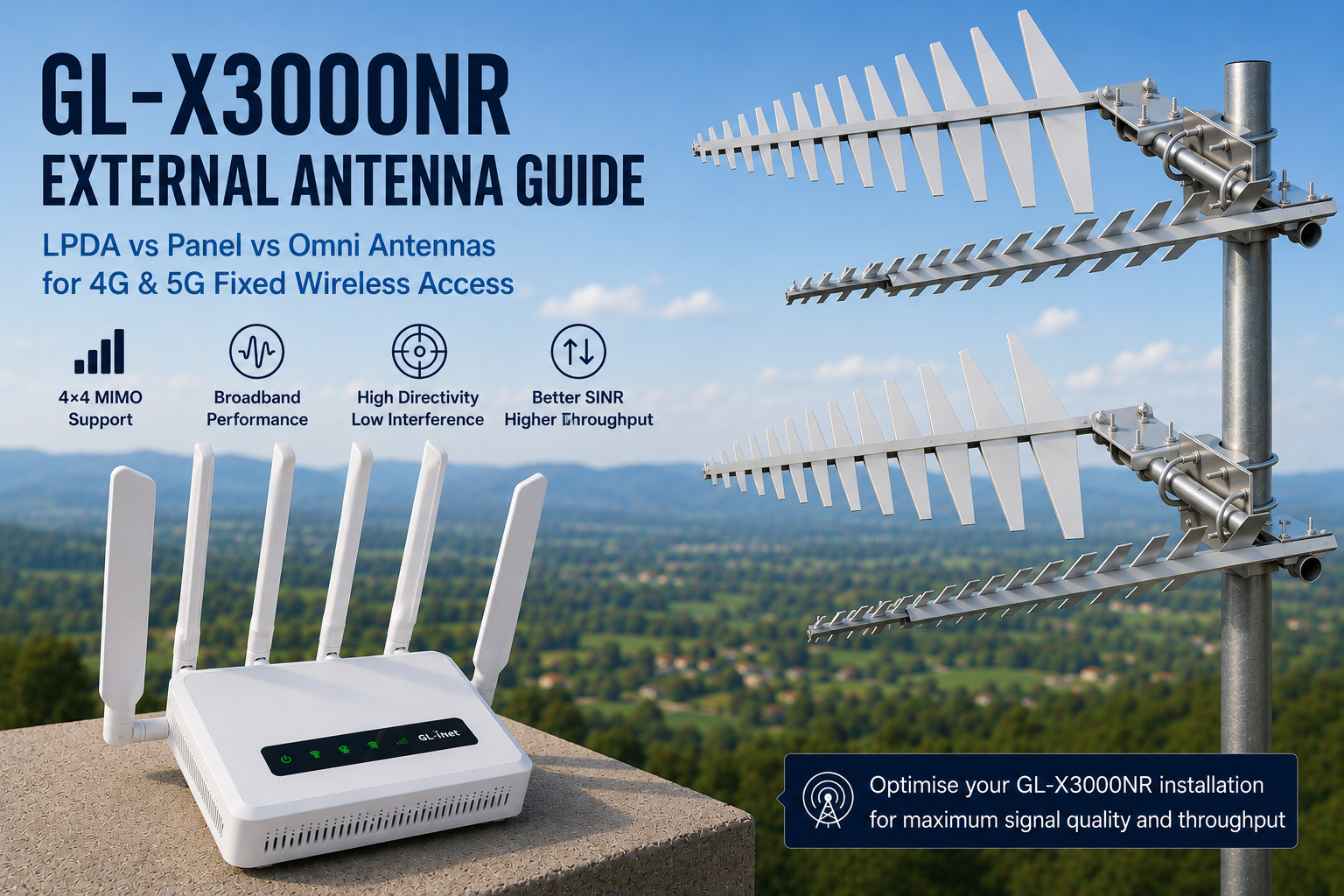
The GL.iNet GL-X3000NR (Spitz AX) has rapidly become one of the most popular 4G/5G routers for fixed wireless access (FWA), remote connectivity, industrial IoT and mobile internet applications.
Unlike many consumer-grade routers, the GL-X3000NR supports external cellular antennas and 4×4 MIMO operation, allowing users to significantly improve signal quality and throughput when deployed correctly.
One of the most common questions asked by GL-X3000NR owners is:
“What type of external antenna should I use?”
The answer depends on your installation environment, signal conditions and performance objectives.
This guide explains the strengths and weaknesses of the three most common antenna architectures used with the GL-X3000NR:
- Omni-directional antennas
- Panel antennas
- Log Periodic Dipole Array (LPDA) antennas
More importantly, it explains why antenna gain alone is often a poor predictor of real-world performance.
Understanding Signal Quality
Many users focus exclusively on signal strength.
In reality, signal quality is often more important than signal strength.
The key metrics are:
RSRP
Reference Signal Received Power.
Measures received signal strength.
RSRQ
Reference Signal Received Quality.
Measures signal quality.
SINR
Signal-to-Interference-plus-Noise Ratio.
Often the single most important indicator of achievable throughput.
A stronger signal does not necessarily result in faster internet speeds if interference levels remain high.
In many installations, improving SINR delivers larger performance gains than increasing signal strength.
Why External Antennas Matter
The stock antennas supplied with the GL-X3000NR are designed for convenience and general-purpose operation.
However, external antennas can provide significant advantages where:
- The router is located inside a building.
- Building materials attenuate cellular signals.
- The nearest cell tower is several kilometres away.
- Multiple towers create interference.
- Maximum throughput is required.
The objective is not simply to increase signal strength.
The objective is to improve overall link quality.
Option 1: Omni-Directional Antennas
Omni antennas receive signals from all directions.
Advantages:
- No aiming required.
- Excellent for mobile applications.
- Simple installation.
- Suitable for RV, marine and vehicle installations.
Disadvantages:
- Lower directivity.
- Receives unwanted signals from all directions.
- Reduced ability to reject interference.
Best suited to:
- RVs
- Camper vans
- Boats
- Mobile installations
Option 2: Panel Antennas
Panel antennas provide moderate gain and moderate directivity.
They are often recommended as a compromise between performance and ease of installation.
Advantages:
- Compact form factor.
- Easier installation than LPDAs.
- Improved signal levels compared with omni antennas.
Disadvantages:
- Wider beamwidth.
- Reduced interference rejection compared with highly directional antennas.
- Performance may vary significantly across operating frequency bands.
Best suited to:
- Residential installations.
- Suburban fixed wireless applications.
- Moderate tower distances.
Option 3: LPDA Antennas
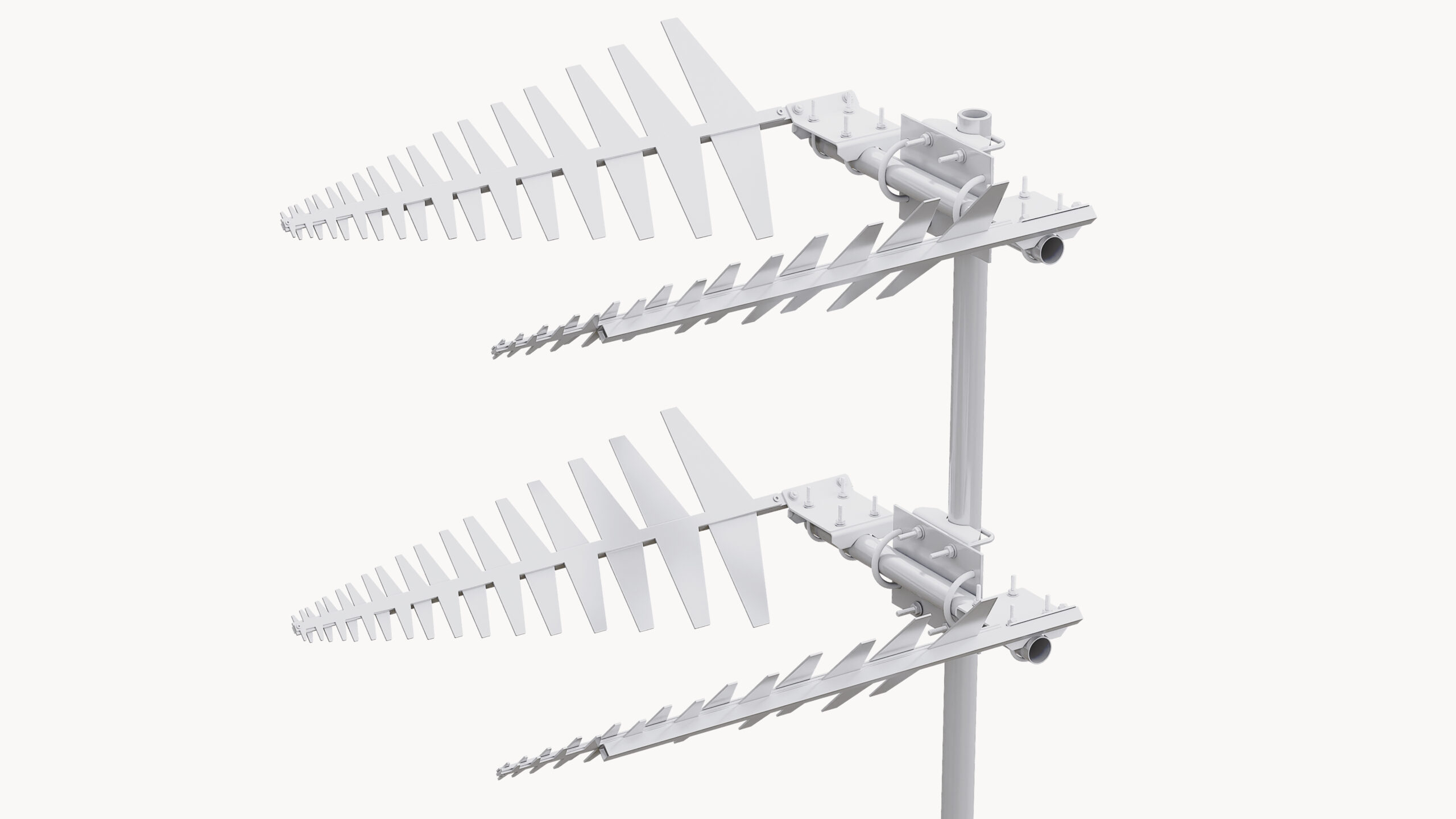
Log Periodic Dipole Array (LPDA) antennas are broadband directional antennas widely used in professional communications systems.
Unlike many panel antennas which are optimised around specific frequency bands, an LPDA maintains relatively consistent performance across a wide frequency range.
Advantages:
- Broadband operation.
- High directivity.
- Excellent interference rejection.
- Consistent performance across multiple LTE and 5G bands.
- Improved SINR in challenging RF environments.
Disadvantages:
- Requires accurate alignment.
- Larger physical size.
- Installation is more involved.
Best suited to:
- Rural properties.
- Long-distance tower connections.
- Fringe coverage areas.
- Congested RF environments.
- Fixed wireless access installations.
Why Directionality Often Matters More Than Gain
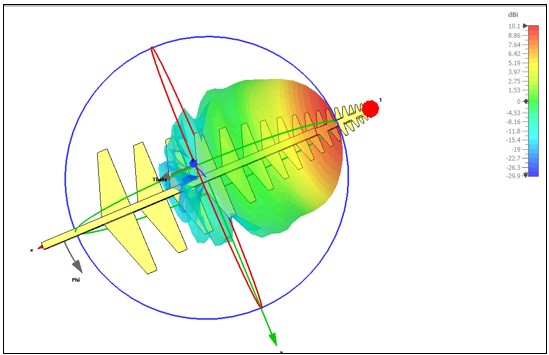
A common misconception is that the antenna with the highest advertised gain will always deliver the best performance.
In practice, throughput is often limited by interference rather than signal strength.
A directional antenna concentrates reception towards the serving cell while reducing reception from unwanted cells.
This can improve:
- SINR
- Carrier aggregation performance
- Modulation efficiency
- Throughput consistency
For this reason, antenna characteristics such as beam shape, front-to-back ratio, sidelobe performance and polarisation diversity can be just as important as antenna gain.
In many fixed wireless installations, SINR becomes the limiting factor long before signal strength.
Beyond Peak Gain Figures
Many cellular antennas are advertised using a single gain figure such as:
“Peak Gain: 9.1 dBi”
While technically correct, a single peak gain figure provides only limited insight into real-world performance.
Important questions include:
- At what frequency was the gain measured?
- How does gain vary across LTE and 5G bands?
- How does the radiation pattern change across frequency?
- What is the front-to-back ratio?
- Is gain-versus-frequency data published?
For broadband cellular applications, consistency across frequency is often more important than the maximum gain achieved at a single frequency.
The HD eXstream Air Fiber One LPDA evaluated in this article maintains approximately 9.4–10.2 dBi gain across frequencies from 700 MHz to 3700 MHz while maintaining approximately 24–27 dB front-to-back ratio.
This combination of broadband operation and strong rear rejection helps reduce unwanted signals arriving from behind the antenna, improving overall link quality in many fixed wireless installations.
Understanding 2×2 and 4×4 MIMO
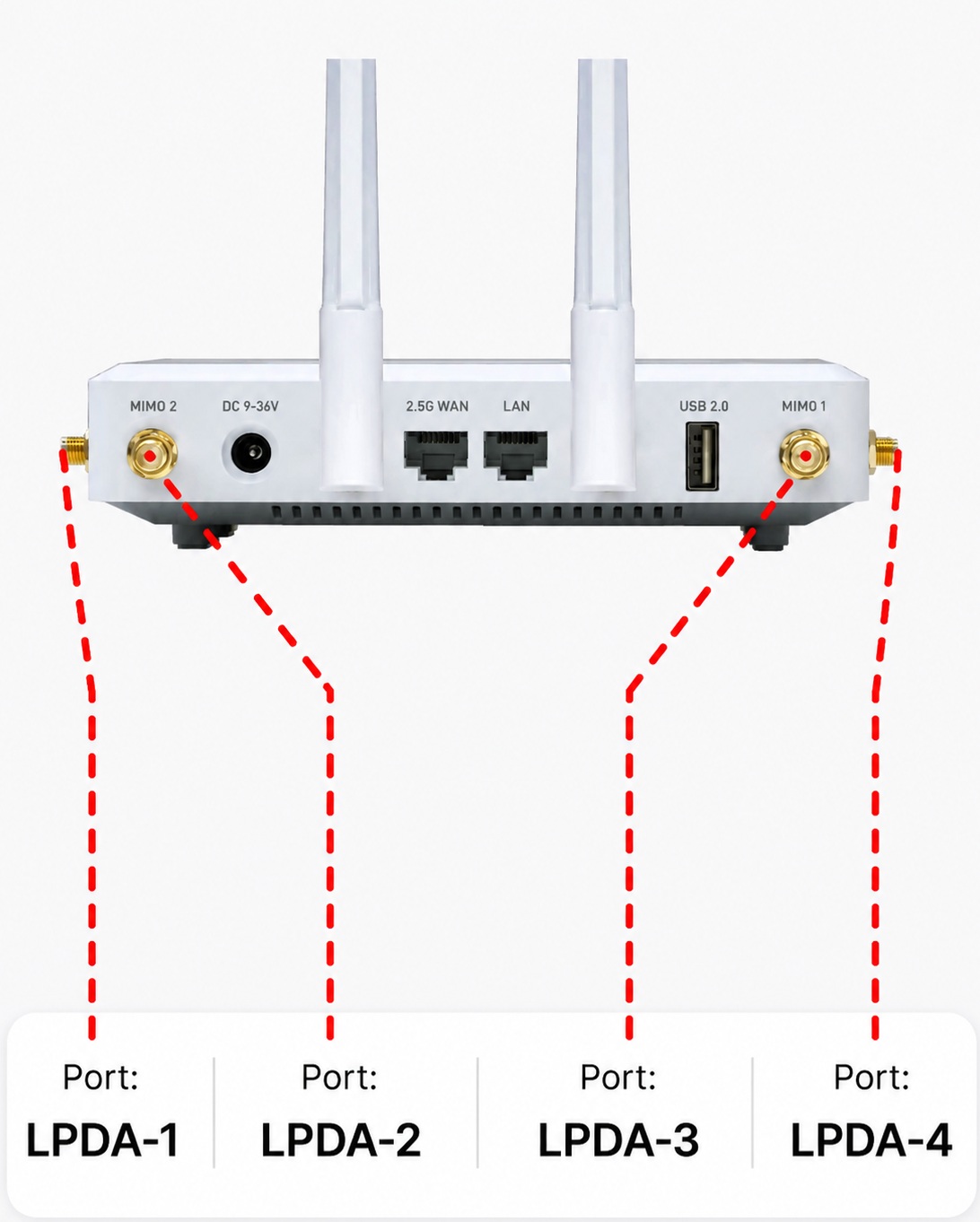
The GL-X3000NR supports 4×4 MIMO operation.
This allows multiple independent data streams to be transmitted simultaneously between the cellular base station and router.
Potential benefits include:
- Higher throughput.
- Improved spectral efficiency.
- Better network utilisation.
- Improved performance during periods of congestion.
However, achieving these gains requires proper antenna selection and installation.
A poorly implemented 4×4 antenna system may provide little advantage over a well-designed 2×2 installation.
Installation Tips
To maximise performance:
- Mount antennas outdoors whenever possible.
- Use low-loss coaxial cable and minimise cable length.
- Maintain polarisation diversity and ±45° slant polarisation.
- Preserve antenna spacing in 4×4 MIMO installations.
- Aim directional antennas for maximum SINR, not maximum RSRP.
- Test performance using RSRP, RSRQ, SINR and throughput measurements.
Real-World Testing
Whenever possible, evaluate antenna performance using measurable data rather than signal bars.
Record:
- RSRP
- RSRQ
- SINR
- Download speed
- Upload speed
before and after installation.
Many users discover that relatively small improvements in SINR can produce substantial improvements in throughput and stability.
The GL-X3000NR provides access to detailed cellular diagnostics, making it possible to optimise an installation using engineering data rather than guesswork.
Which Antenna Should You Choose?
| Application | Omni | Panel | LPDA |
|---|---|---|---|
| RV / Caravan | Excellent | Fair | Poor |
| Mobile Operation | Excellent | Poor | Poor |
| Suburban Fixed Wireless | Fair | Good | Good |
| Rural Fixed Wireless | Poor | Good | Excellent |
| Long Distance Tower | Poor | Fair | Excellent |
| Congested RF Environment | Poor | Good | Excellent |
Conclusion
The best antenna for a GL-X3000NR depends on the application.
Omni antennas are ideal for mobile applications where signals may arrive from multiple directions.
Panel antennas offer a good balance between performance and simplicity for many residential installations.
For fixed installations where maximum performance is the objective, LPDA antennas provide significant advantages through improved directivity, broadband operation and enhanced interference rejection.
Ultimately, understanding and optimising RSRP, RSRQ and SINR is far more important than focusing on antenna gain alone. The objective is not maximum gain — the objective is maximum throughput.